
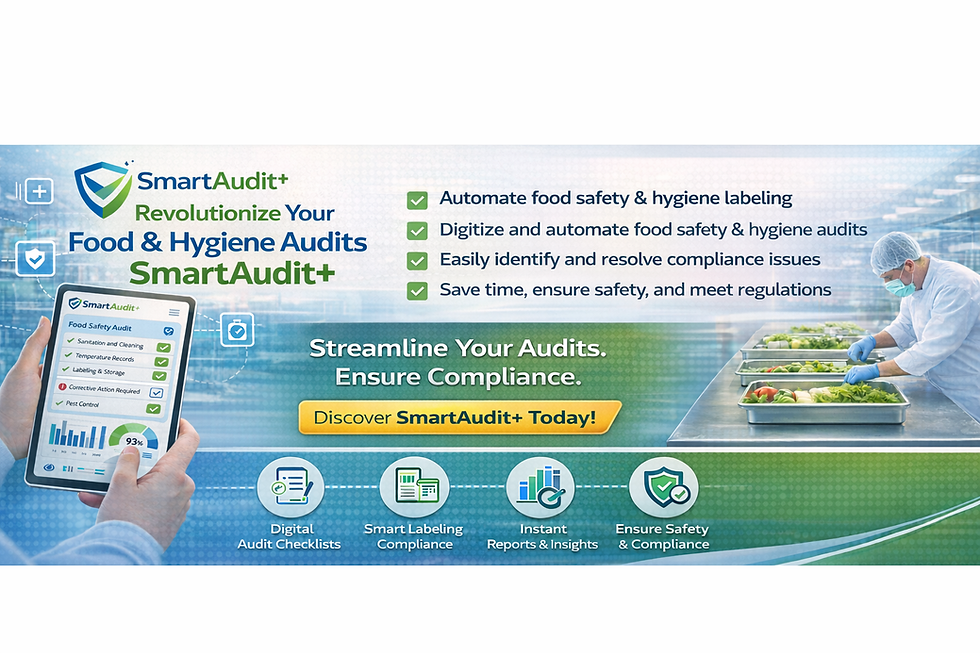
Food safety in the UAE isn’t just a regulatory checkbox—it’s a commitment to public health, consumer trust, and brand reputation. With authorities like Dubai Municipality, ADAFSA, and MOIAT closely monitoring food operations, businesses are expected to maintain the highest standards of hygiene, safety, and labeling—not just during audits, but every single day.👍👍
For many organizations, keeping up with this level of compliance can feel overwhelming. That’s where digital systems and ERP-based solutions come into play, offering a structured, transparent, and efficient approach to managing compliance.
Food Safety & Hygiene Audits: Going Beyond Compliance😊
UAE regulators conduct audits to ensure that food businesses are consistently protecting public health. These audits cover multiple dimensions:
👍Good Manufacturing Practices (GMP) and hygiene protocols to prevent contamination
👍Cleaning and sanitation records to ensure safe food environments
👍Temperature monitoring and Critical Control Points (CCPs) in production and storage
👍Supplier approvals and traceability, verifying that raw materials meet safety standards
👍Employee hygiene practices and training records, ensuring that staff follow proper procedures
Traditional audit processes often rely on manual logs, spreadsheets, and scattered records, which are prone to errors and delays. Digital solutions replace these fragmented systems with centralized, auditable data, enabling real-time monitoring, trend analysis, and quick preparation for inspections.
For example, temperature logs in a cold storage facility can be automatically captured and stored digitally, alerting managers instantly if any deviations occur—reducing risks and ensuring regulatory readiness.
Food Labeling Compliance: Meeting UAE Standards✌️
Food labeling in the UAE is strictly regulated under GSO and local standards, requiring businesses to provide clear, accurate, and legally compliant information. Common areas of review include:
👍Arabic labeling requirements, ensuring information is understandable for local consumers
👍Ingredient and allergen declarations, preventing potential health risks
👍Nutritional information, promoting transparency and consumer awareness
👍Shelf life and storage conditions, safeguarding product quality
👍Country of origin, maintaining authenticity and traceability
Labeling issues remain one of the most frequent findings during audits, often due to outdated or inconsistent label data. Digital solutions can link product formulations to label content, automatically updating labels when ingredients or allergens change, reducing errors, and maintaining compliance.
Aligning Hygiene and Labeling Controls🙌
While food safety and labeling audits are evaluated separately, UAE regulators🤗 expect strong alignment between the two. Examples of this alignment include:
Allergen management in production must match allergen declarations on packaging
Supplier specifications must support both hygiene risk assessments and accurate labeling
Changes in ingredients, processes, or suppliers must trigger simultaneous reviews for safety and labeling compliance
Integrated digital systems create a single source of truth, ensuring consistency across quality, operations, and regulatory teams. This eliminates gaps, reduces risks, and strengthens overall audit readiness.
Building Continuous Audit Readiness
In the UAE, audits are more than regulatory exercises—they are indicators of operational maturity and reliability. Organizations that embed compliance into daily workflows are better prepared for:
👍Regulatory inspections, minimizing disruptions and penalties
👍Customer and third-party audits, instilling confidence in partners
👍Market expansion and new product launches, ensuring products meet local standards from day one
Digital systems support proactive compliance, turning audits from stressful events into manageable, transparent processes. Real-time dashboards, automated alerts, and traceable records allow teams to identify issues before they become non-conformities, creating a culture of continuous improvement.
Final Thoughts
True compliance goes beyond documentation—it requires structured systems, clear accountability, and reliable, auditable data.
By adopting digital solutions aligned with UAE regulations, food businesses can shift from reactive audit preparation to continuous compliance, enhancing operational efficiency and building trust with regulators, partners, and consumers.
Platforms like SmartAudit+🤩 empower food businesses to manage food safety, hygiene, and labeling audits with clarity, control, and confidence😊 , turning compliance from a challenge into a competitive advantage👍.
